
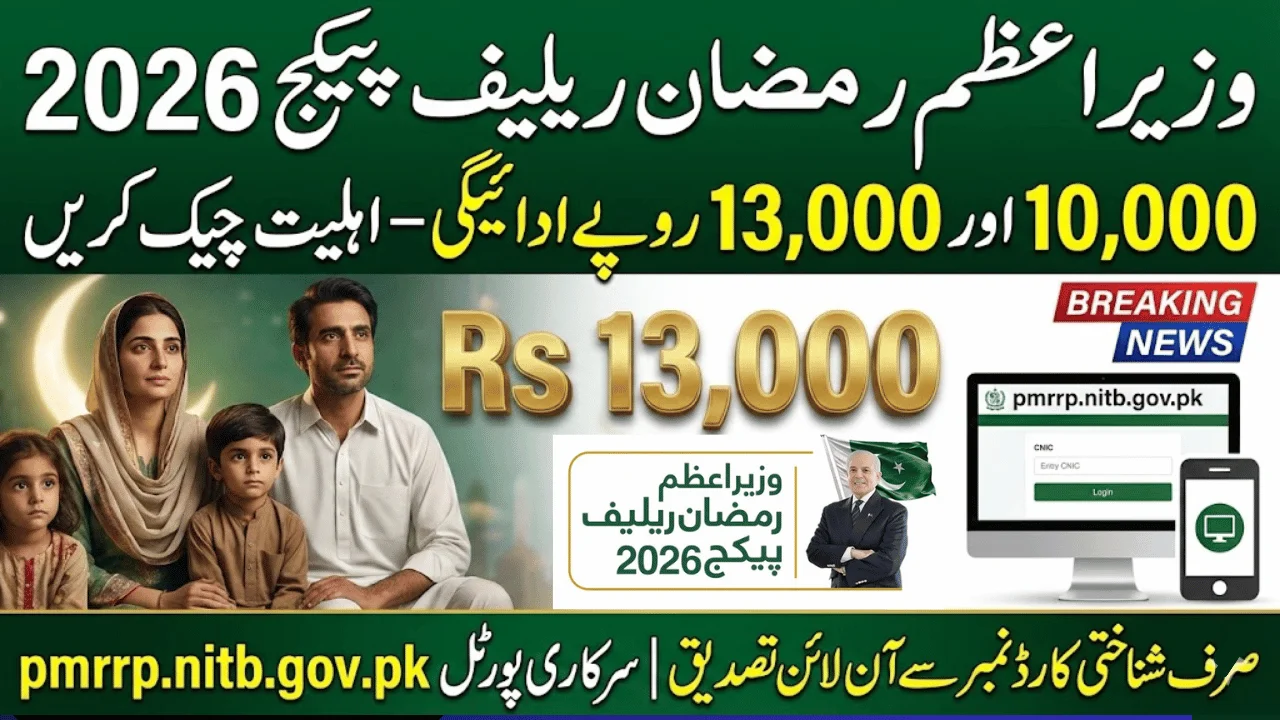
How to Check Eligibility for PM Ramzan Relief Package 2026 via pmrrp.nitb.gov.pk. The holy month of Ramadan is a time of reflection, generosity, and community support. To ease financial pressure on low-income households, the Government of Pakistan has introduced the PM Ramzan Relief Package 2026, offering Rs 10,000 and Rs 13,000 cash assistance to deserving families across the country.
This complete guide explains how to check eligibility through the official portal pmrrp.nitb.gov.pk, who qualifies, required documents, payment methods, and step-by-step instructions to avoid fraud. If you want your blog post to rank internationally and attract organic Google traffic, this detailed and SEO-optimized article covers everything in depth.
Official Portal for Eligibility Check
To qualify for financial assistance, applicants must meet certain requirements.
Basic Requirements:
- Must be a Pakistani citizen.
- Must possess a valid CNIC.
- Belong to a low-income household.
- Not be a government employee.
- Not own large property or registered business assets.
Priority Categories:
- Widows
- Orphans
- Persons with disabilities
- Daily wage workers
- Families registered under poverty score databases
The government cross-checks your details using national socioeconomic surveys.
What is the PM Ramzan Relief Package 2026?
The PM Ramzan Relief Package 2026 is a federal assistance initiative launched under the supervision of the Prime Minister of Pakistan to support financially struggling citizens during Ramadan. The package is designed to provide direct financial relief and essential food subsidies to millions of households affected by inflation.
The program is managed digitally through the National Information Technology Board portal:
👉 pmrrp.nitb.gov.pk
Financial Assistance Amount – Rs 10,000 & Rs 13,000 Explained
Under the 2026 relief scheme, beneficiaries may receive:
- Rs 10,000 – Standard financial assistance for eligible low-income households.
- Rs 13,000 – Enhanced support for extremely deserving families already registered under federal poverty alleviation databases.
The exact amount depends on eligibility criteria, socioeconomic status, and data verification through national databases.
How to Check Eligibility for PM Ramzan Relief Package 2026
Follow these simple steps to verify your eligibility online:
Step 1: Visit the Official Portal
Go to the official website:
https://pmrrp.nitb.gov.pk
Make sure you access only the official site to avoid scams.
Step 2: Enter Your CNIC Number
Provide your 13-digit CNIC number without dashes.
Step 3: Complete Captcha Verification
Enter the security code displayed on the screen.
Step 4: Submit Application
Click on the “Check Eligibility” button.
Step 5: View Status
You will see one of the following responses:
- Eligible for Rs 10,000
- Eligible for Rs 13,000
- Not Eligible
- Under Verification
Required Documents for Verification
Although online checking requires only CNIC, you may need the following documents if physical verification is required:
- Original CNIC
- Registered mobile number
- Utility bill copy
- Proof of income (if requested)
Payment Distribution Methods
Eligible beneficiaries can receive payments through:
1. Bank Transfers
Funds may be transferred directly to linked bank accounts.
2. BISP Payment Centers
Payments can be collected from authorized centers under the Benazir Income Support Programme.
3. Mobile Wallets
In some regions, digital wallets are used for quick distribution.
How Long Does Verification Take?
Most applications are processed within 3 to 7 working days. However, during peak Ramadan registration periods, it may take slightly longer due to heavy traffic.
Frequently Asked Questions (FAQs)
1. Is online registration required?
No separate registration is required if your data already exists in government databases. Simply check eligibility online.
2. Can government employees apply?
No, government employees are not eligible.
3. What if my CNIC shows “Under Verification”?
Wait a few days and recheck status.
4. Is there a deadline?
Yes, applications are usually accepted before and during Ramadan.
